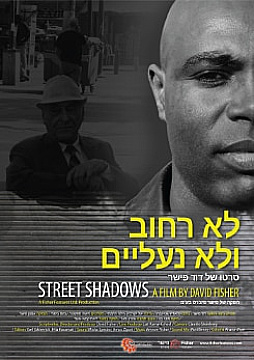
Street Shadows
The rise and fall of the street that was supposed to be the Champs Élysées of Tel Aviv
In the Words of Director David Fisher:
Why is the south always the one left behind? Why here, of all places, that tens of thousands of African refugees were brought? How was anyone meant to work out a relationship with the people who already lived here? In my films I usually try to escape "issues" in favor of people — but here, in Street Shadows, it was clear from the start that there were no heroes, no villains. That made it hard, because there was no ready-made story, and to this day I'm not certain I've found one. It was only when I understood the film I was making wasn't about arriving anywhere, only about the journey there — that I wasn't on some crusade to find who started it, who's to blame, who's right — that I could finally breathe. I found myself asking, not for the first time, what I actually am: an artist, or a messenger? Do I have something to deliver? Can a film like this change anything at all?
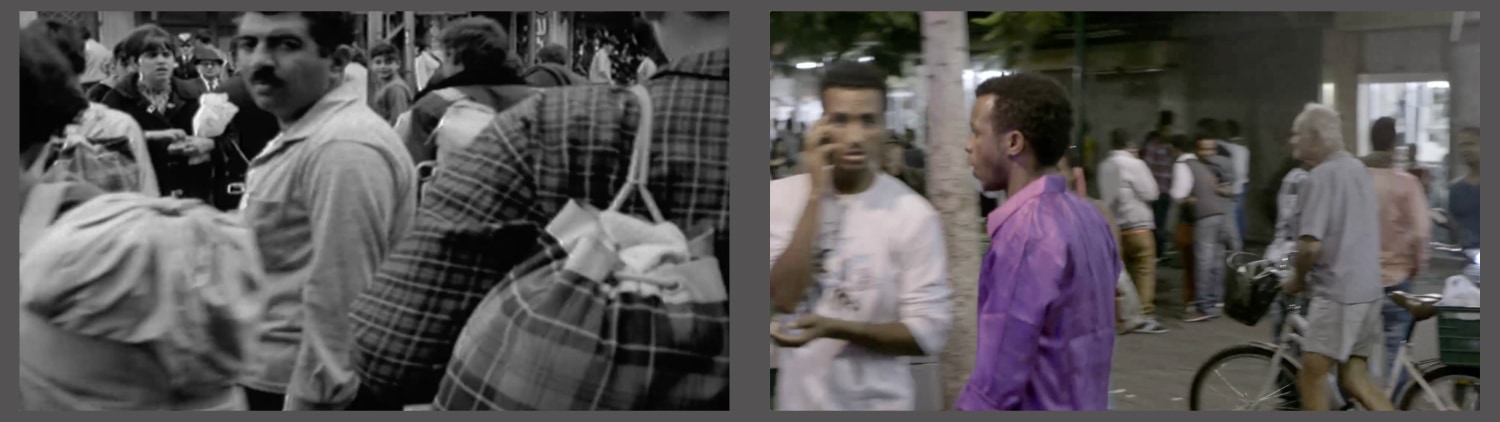
I walked the length of Neve Sha'anan — just 350 meters end to end — again and again. Liat, the producer, cleared the way ahead of me, steadied my nerves, and believed in it before I did. When I finally felt ready, I went out with Claudio, the cinematographer, to talk with people. Not interview them — talk. The difference matters: I came prepared for the encounter, but deliberately unprepared for the conversation itself. That's not a trick of phrasing. It came from wanting to stay open to whoever was in front of me — to what they had to say — rather than fitting them into the shapes I could have predicted from research done in advance.
Armed with a camera held at eye level, I set out to tell this street's story through the eyes of the people who live on it and live off it. I chose to shoot and edit in the style of Israeli novelist Yaakov Shabtai, whose stream-of-consciousness prose in Past Continuous follows one thing leading to the next, one person leading to another. The people in this film are heroes only for a moment; often, we never meet them again. The street's human mosaic — its real condition today — brings together, side by side, refugees from Africa, Jewish shopkeepers, old-timers born and raised here, passersby, and anyone with something to say. Every one of them is a story.
When I came back with dozens of hours of footage, I sat down to find the logic in all that wandering — to weave the faces into a mosaic, the way a mason fits interlocking paving stones. And then I heard my brother Amnon Fisher's song "Osher" ("Happiness"), and something clicked. The film and the song became one.
This was a journey in which I came to know a different Israel — and one I now invite you to join.
Student or Faculty?
Watch all movies for FREE
Access through your university or college
Login through your university / college